
Why Builders Are Switching to AAC Blocks with Specialized Joint Mortar
 Sep 28, 2026
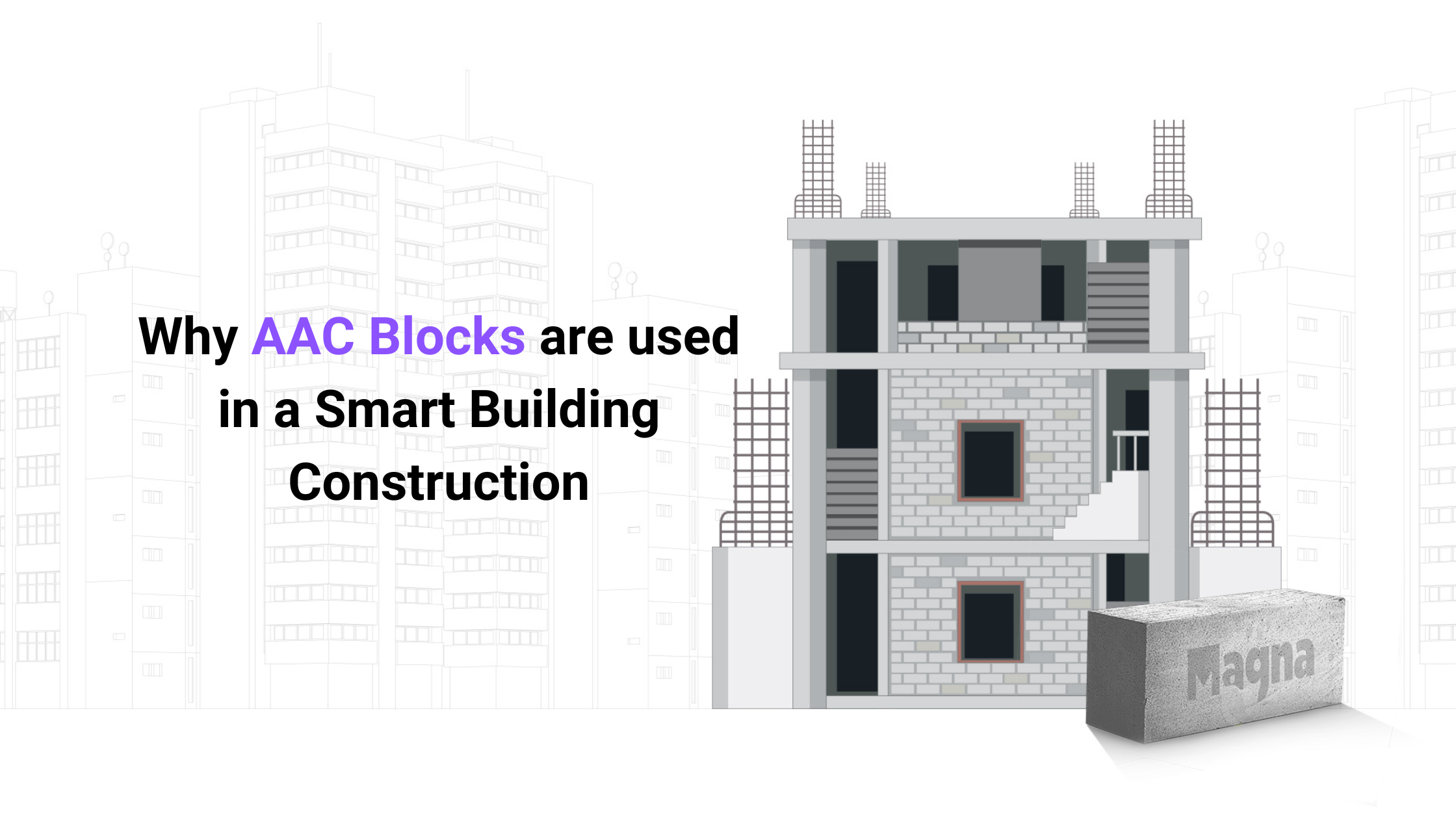
The construction industry is ever-changing, and builders are always looking for materials that can help them build better buildings, increase efficiency, and cut costs. AAC Blocks with special joint mortar are one combination getting attention. Autoclaved Aerated Concrete blocks, or AAC, are lightweight, strong, and easier to install than most traditional masonry materials. Coupled with the right joint mortar, they can offer a faster and more accurate construction solution.
More and more contractors are adopting AAC Block construction for its practical benefits throughout the building process, from residential to commercial buildings. Here’s why this combination is becoming more and more popular.
What are AAC Blocks?
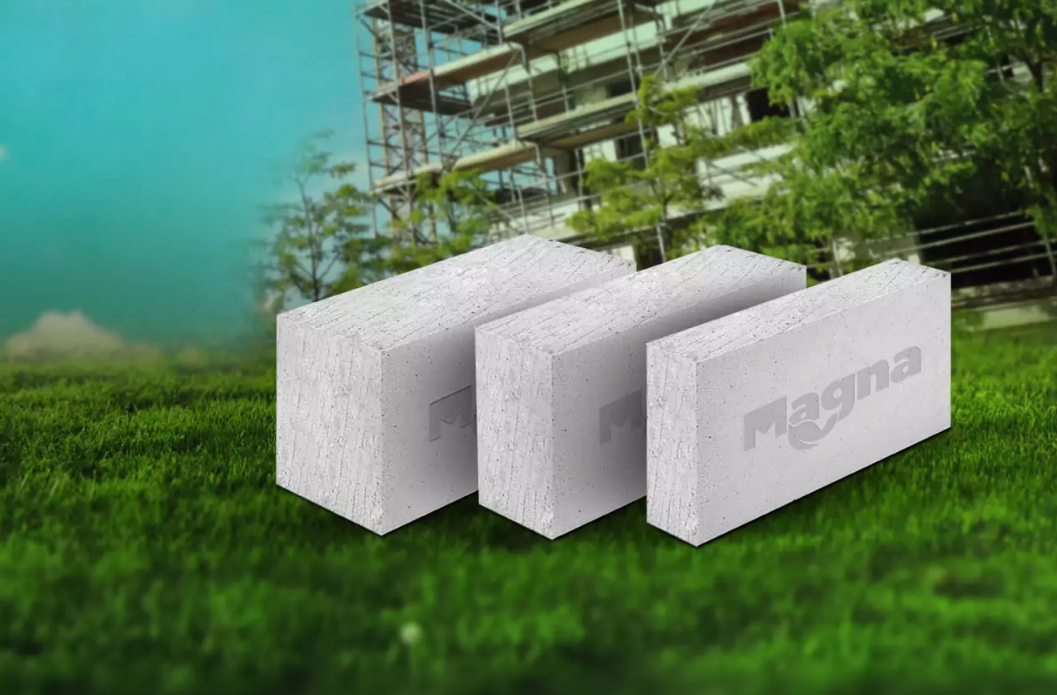
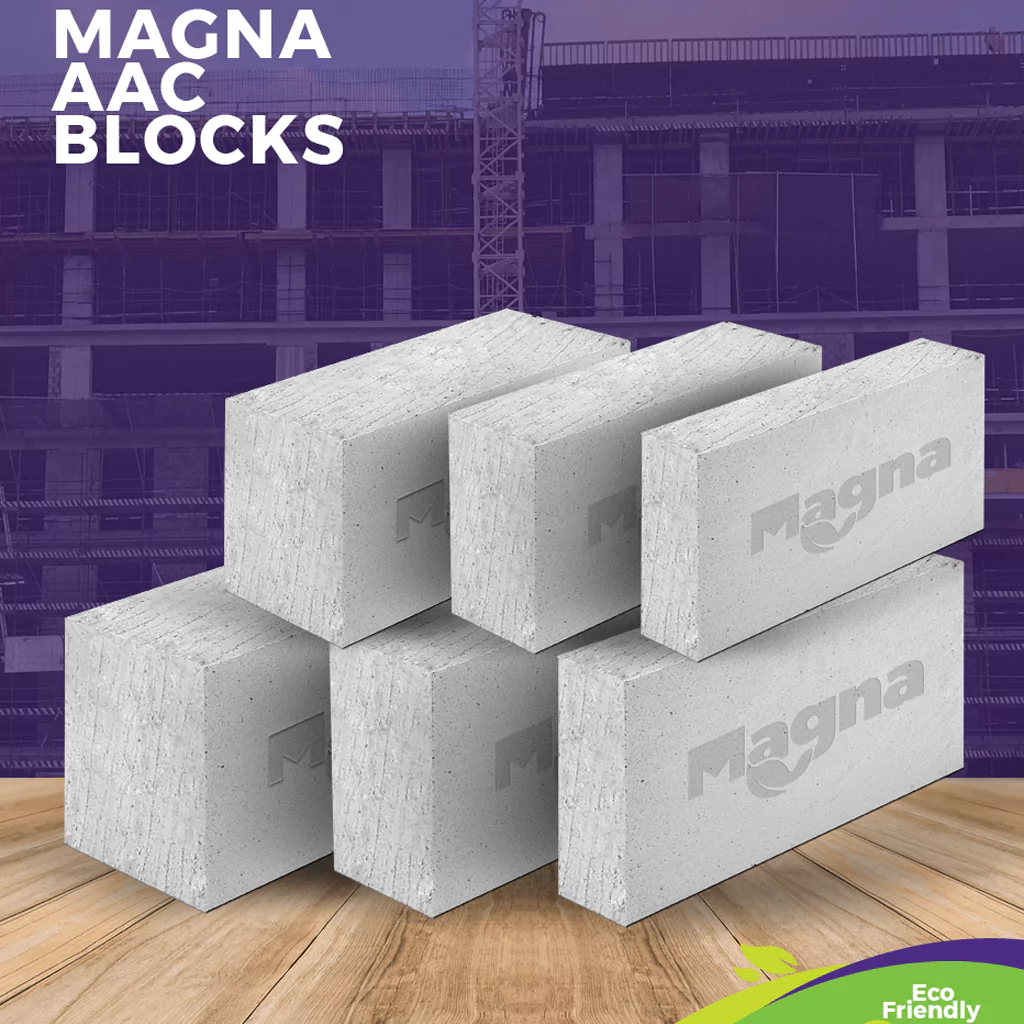
AAC blocks are lightweight concrete masonry units made with cement, sand or fly ash, lime, water and an aerating agent. During production, the material is autoclaved. This builds a cellular structure with many small air pockets. The structure makes AAC blocks light in weight compared to conventional concrete blocks and bricks.
Because of their uniform size, the wall can be constructed more accurately, and less mortar is needed for installation. But the performance of an AAC wall is determined by the quality of the blocks used and the material employed to join them together.
What Is Specialized AAC Block Joint Mortar?
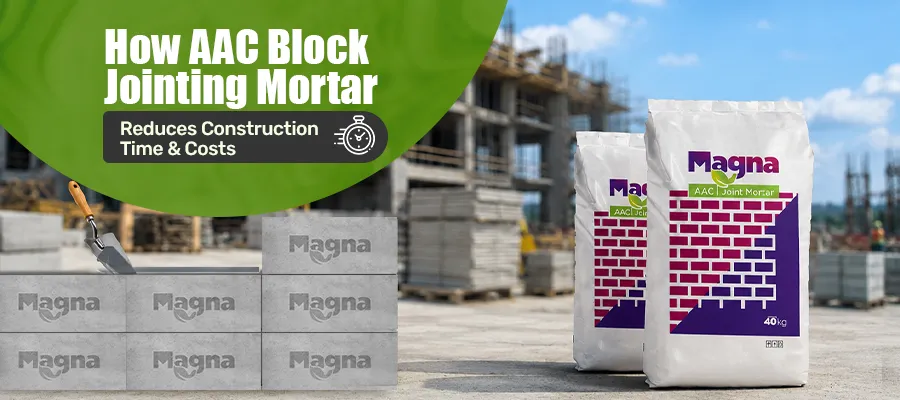
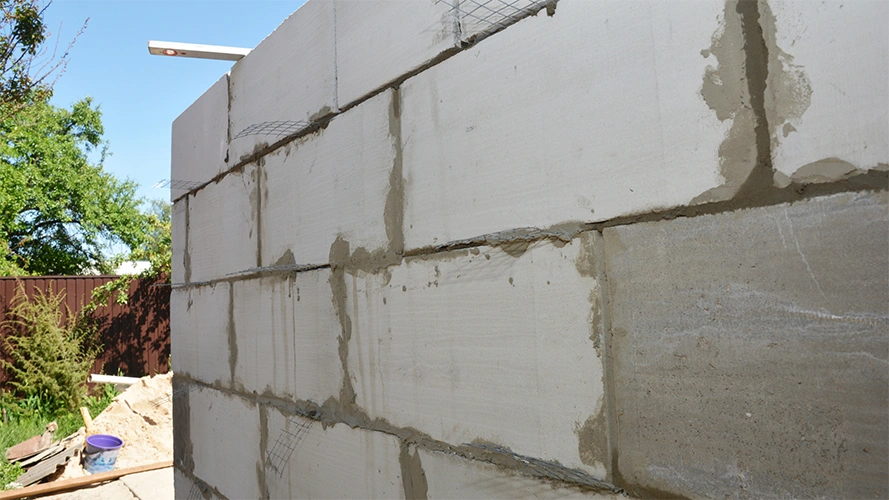
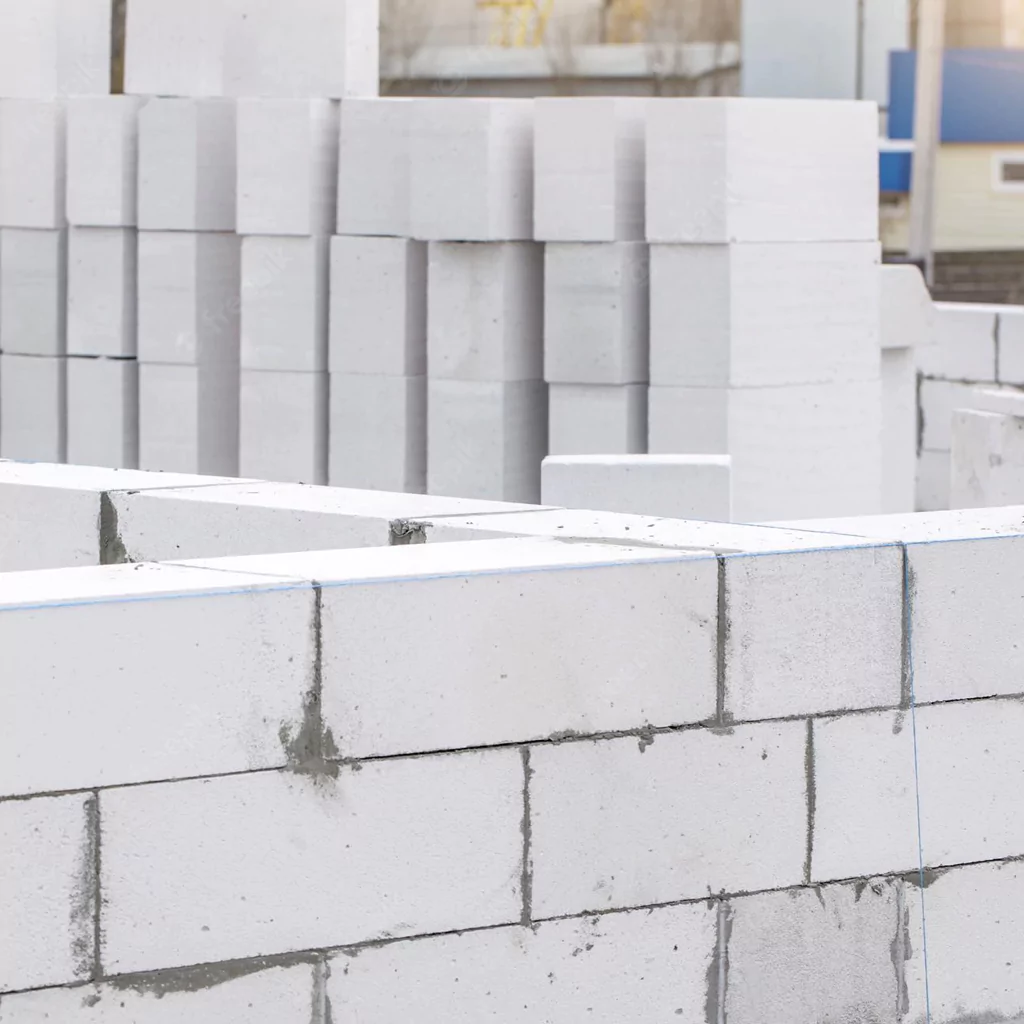
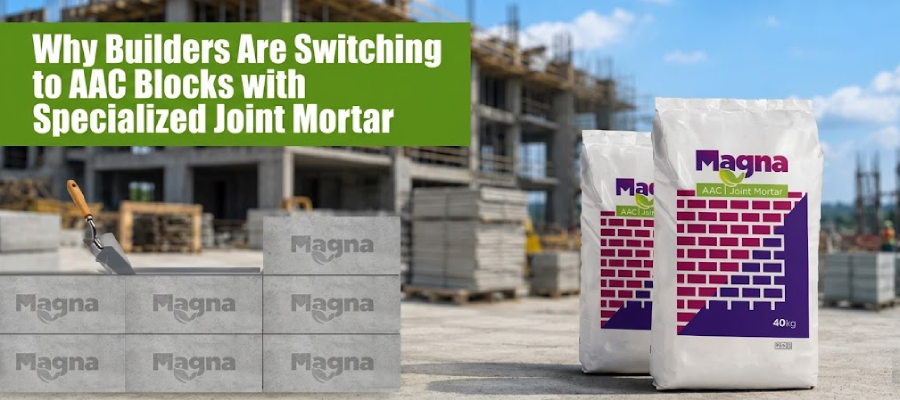
AAC Joint Mortar is a specific type of bonding agent that has been developed specifically for the joining of AAC blocks; it differs from traditional masonry mortar in the sense that it is normally used in the form of a thin film between the blocks.
Specific joint mortar provides good alignment and helps in saving materials as well as in easy application. It is essential to carefully adhere to the manufacturer’s directions.
Why Are Builders Switching to AAC Blocks with Joint Mortar?
Faster Construction
AAC blocks are relatively light and easy to manipulate; this will increase the efficiency of masonry work. Together with the thin bed joint mortar, blocks can be placed and aligned easily. This will help to work on difficult construction projects efficiently.
Lower Mortar Consumption
AAC joint mortar has been specially formulated for thin bedding. When compared to the regular thick mortar joints used for laying bricks, thin-bed mortar may lead to reduced consumption of mortar between blocks. The usage of mortar will depend on several factors, including the size of the blocks.
Improved Wall Alignment
Generally speaking, AAC blocks are produced with uniform dimensions. Contractors can maintain more consistent joints and enhance wall alignment by using joint mortar. A more uniform surface for finishing can also be produced by proper alignment.
Lightweight Construction
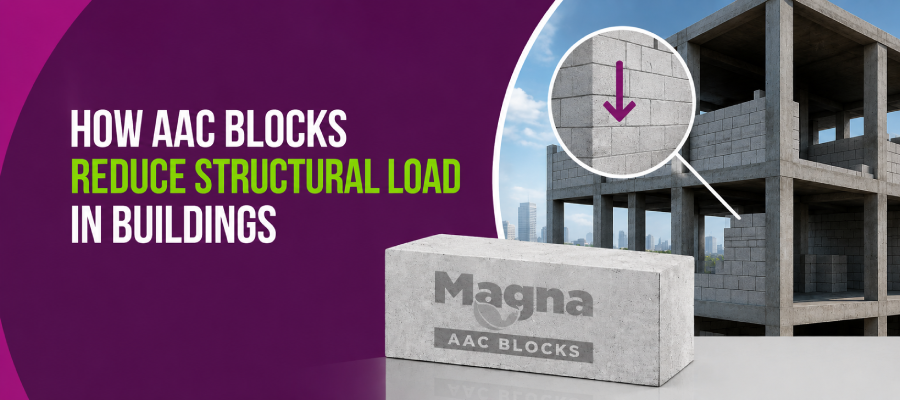
When compared to many traditional masonry materials, AAC blocks have a low density. They are simpler to lift, move, and position at the construction site because they are lightweight. When doing structural planning, skilled specialists can also take wall weight into account.
Cleaner Construction
Because less surplus mortar is usually formed around joints, thin-bed mortar application can contribute to a cleaner masonry process. When used properly, this can make managing the workspace easier.
How to Use AAC Block Joint Mortar
Prepare surfaces of AAC blocks by removing any loose dust or other impurities. Then, mix the special joint mortar with clean water according to the manufacturer’s recommendations. Do not add too much water.
Spread the mortar uniformly with an appropriate notched trowel or the application equipment specified. Carefully place each AAC block and level it to the appropriate level and alignment. Continue to inspect horizontal and vertical alignment during construction to ensure consistent wall quality.
Common Mistakes to Avoid
Excessively thick mortar joints, improper water ratios, dusty block surfaces, poor alignment, inappropriate mortar, and inappropriate material storage are all things that builders should steer clear of. The quality of the final masonry may also be impacted by disregarding manufacturing specifications.
Choosing the Right AAC Block Mortar
While selecting AAC block mortar, keep in mind the compatibility between products, technical data sheets, suggested joint thickness, mixing procedure, working life, consumption per bag, and application requirements. Select brands that clearly mention the technical data sheets and installation details.
Frequently Asked Questions
Is a special mortar required for AAC blocks?
AAC blocks are often installed with thin-bed mortar designed specifically for AAC blocks. Follow the block and mortar manufacturer guidelines.
Do AAC blocks help in reducing construction time?
Lightweight blocks and the thin-bed mortar installation process help in increasing masonry efficiency. Time savings will depend on labor and other factors.
Does AAC joint mortar save wastage?
Thin-bed application helps in saving mortar quantity compared to conventional thick-joint masonry. Wastage will depend on the application process.
Can AAC blocks be used in residential constructions?
Yes. AAC blocks are often used in residential wall constructions based on construction and design requirements.
Conclusion
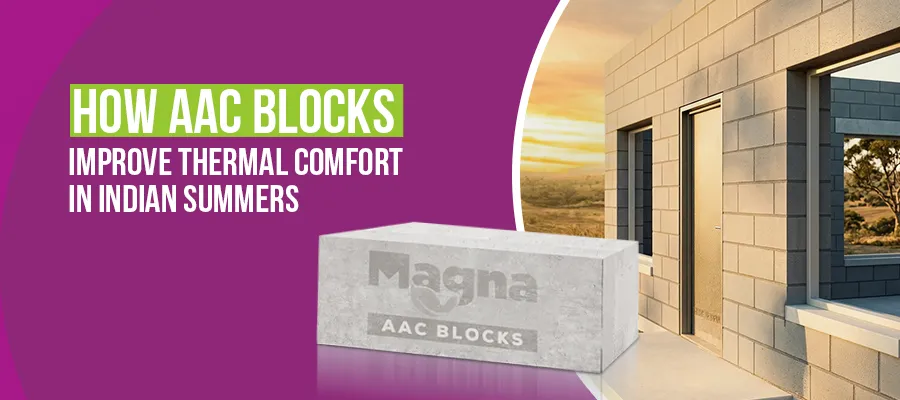
The use of AAC blocks along with specialized joint mortar makes up a modern system of construction using masonry technology. The advantages of AAC blocks are represented by the fact that they ensure lightweight construction, dimensional uniformity, and thermal insulation capabilities, and specialized joint mortar ensures thinness and uniformity in application.
Those contractors who wish to become more productive in their construction activities will find that building masonry walls with AAC technology can be a good solution if the right materials are used properly. If you are searching for a high-quality and trusted AAC Block Manufacturer, look no further than Magna AAC Blocks. They are well-known for providing commendable quality and contributing to lasting structures.
Recent Posts